
Complete Guide to Safety Nets for Homes, Apartments, and Commercial Buildings
Safety is one of the most important parts of any home or building. Whether you live in a high-rise apartment, manage a commercial property, or own an independent house, open spaces such as balconies, windows, staircases, ducts, and terraces can create safety concerns. Fortunately, safety nets offer a simple and practical way to reduce these risks.
Today, safety nets come in different materials, sizes, and designs. As a result, you can choose a solution based on your space, safety requirements, and budget.
In this complete guide, we will explore the different types of safety nets, their benefits, applications, and important factors to consider before installation.
What Are Safety Nets?
Safety nets are strong mesh systems that create a protective barrier around open or vulnerable areas. Manufacturers typically make them from durable synthetic materials that can handle regular outdoor exposure.
Unlike solid barriers, safety nets allow air and light to pass through. Therefore, they can provide protection without making your space feel closed or uncomfortable.
You can install safety nets in homes, apartments, offices, schools, factories, warehouses, construction sites, and other commercial buildings.
Why Are Safety Nets Important?
Open spaces can sometimes become dangerous, especially when children, pets, or objects are involved. For example, a balcony without proper protection may increase the risk of accidental falls. Similarly, birds can enter open balconies and create hygiene problems.
Safety nets help address these concerns without major structural changes.
Here are some common reasons people install safety nets:
- To improve balcony safety
- To protect children and pets
- To prevent birds from entering balconies
- To stop objects from falling
- To improve staircase safety
- To protect construction workers
- To cover open ducts and shafts
- To provide protection around sports areas
- To reduce bird-related hygiene problems
Types of Safety Nets for Homes and Buildings
Different areas require different types of protection. Therefore, choosing the right net is essential.
1. Balcony Safety Nets
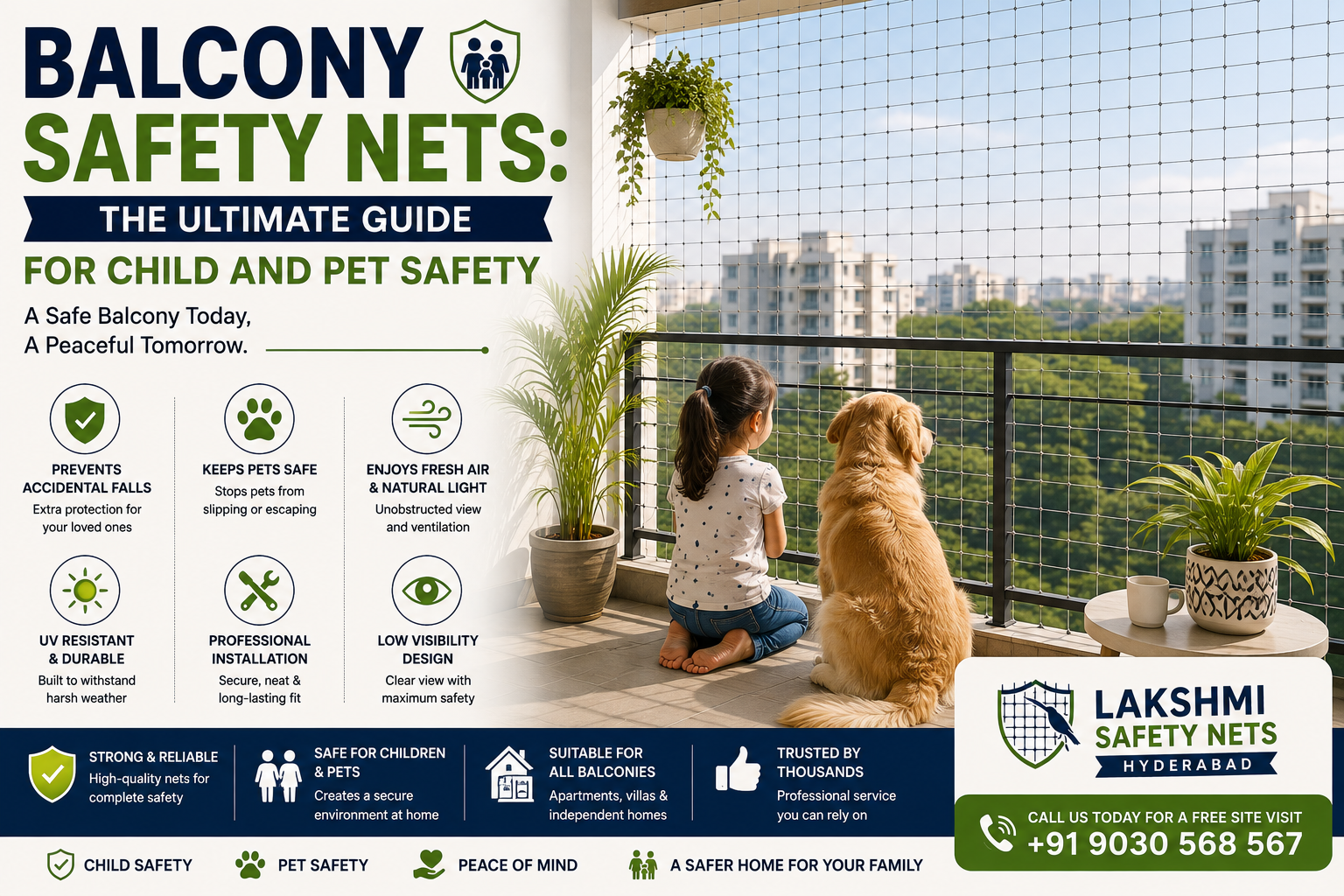
Balcony safety nets are among the most popular safety solutions for apartments and homes.
They create a protective barrier around balconies while maintaining visibility and ventilation. Moreover, they can help reduce the risk of accidental falls involving children and pets.
Balcony nets work particularly well in high-rise apartments because they provide an additional layer of protection without blocking the view completely.
2. Child Safety Nets
Children are naturally curious, and balconies, windows, and staircases can attract their attention. Child safety nets help create a safer environment by covering potentially dangerous open areas.
Parents can use them around balconies, staircases, windows, and other elevated spaces. In addition, these nets can provide extra peace of mind without requiring permanent construction work.
3. Pet Safety Nets
Cats, dogs, and other pets can sometimes approach balcony edges or squeeze through openings. Pet safety nets help reduce these risks.
For apartment owners, they offer a practical way to give pets access to fresh air while creating a safer boundary around the balcony.
4. Pigeon and Bird Safety Nets
Birds can create several problems when they enter balconies. They may leave droppings, feathers, nesting material, and unpleasant odors.
Pigeon safety nets create a physical barrier that prevents birds from entering the protected area. Consequently, they can help keep balconies cleaner and easier to maintain.
These nets work well for apartments, offices, hotels, hospitals, and commercial buildings.
5. Duct Area Safety Nets
Building ducts and shafts can contain open spaces that require additional protection. Duct area safety nets cover these openings and help reduce the risk of people or objects falling into them.
They can also prevent birds and other unwanted elements from entering the duct area.
6. Staircase Safety Nets
Staircases can become risky areas, especially in homes with young children or pets. Staircase safety nets provide an additional protective barrier along open sides and gaps.
Furthermore, they can work well in apartment buildings, villas, schools, and other properties where staircase safety matters.
7. Construction Safety Nets
Construction sites contain several potential hazards, including falling tools, materials, and debris. Construction safety nets help provide additional protection around elevated work areas.
Workers and contractors can use them around building structures, scaffolding, and other elevated locations. However, construction projects should always follow applicable workplace safety standards and use properly rated systems.
8. Industrial Safety Nets
Factories, warehouses, and industrial facilities often have elevated platforms, machinery areas, storage spaces, and open sections.
Industrial safety nets can help protect workers and equipment in these environments. Because industrial applications can involve higher loads and greater risks, selecting a suitable net and professional installation becomes especially important.
9. Cricket Practice Nets
Sports facilities, schools, academies, and residential communities often use cricket practice nets.
These nets help keep cricket balls within the practice area. As a result, they can reduce interruptions and improve safety for players and people nearby.
10. Swimming Pool Safety Nets
Swimming pool safety nets create an additional barrier around pool areas. They can help reduce accidental access, particularly when children are present.
However, pool safety nets should complement, rather than replace, responsible supervision and appropriate pool safety measures.
Benefits of Installing Safety Nets
Safety nets offer several practical advantages.
Improved Safety
First and foremost, safety nets help reduce risks around open spaces. They provide an additional barrier in areas where accidental falls or object drops could occur.
Child Protection
Homes with children can benefit significantly from balcony, window, and staircase safety nets. These solutions help create safer boundaries around elevated areas.
Pet Protection
Pets can move quickly and may not recognize the dangers of open balconies. A properly installed pet safety net helps create a safer outdoor space.
Bird Protection
Bird nets prevent pigeons and other birds from entering protected areas. Therefore, they can help reduce droppings, nesting, feathers, and cleaning requirements.
Better Ventilation
Unlike solid barriers, mesh safety nets allow air to circulate. They also allow natural light to enter, so the protected area can remain open and comfortable.
Minimal Visual Obstruction
Many modern safety nets use thin, lightweight mesh. Consequently, they provide protection while maintaining much of the original view.
Easy Maintenance
Good-quality safety nets generally require simple maintenance. Regularly checking the mesh, fixing points, and surrounding structure can help maintain their effectiveness.
Cost-Effective Protection
Compared with major structural modifications, safety nets can provide a relatively straightforward way to improve protection in many areas.
Safety Nets for Apartments
Apartment buildings often have balconies, utility areas, ducts, windows, and other open spaces. Therefore, residents can use different safety net solutions depending on their requirements.
For example, a family with young children may choose balcony and staircase nets. Meanwhile, pet owners may focus on balcony protection. If pigeons are the main concern, bird protection nets may provide the most suitable solution.
Before installation, measure the area carefully and identify all openings that require protection.
Safety Nets for Independent Homes and Villas
Independent houses and villas can also benefit from safety nets. Balconies, terraces, staircases, windows, swimming pools, and utility areas may require additional protection.
For instance, homeowners can install child safety nets around balconies or pet nets around outdoor areas. Similarly, bird nets can help protect open balconies from pigeons.
Because every home has a different layout, a professional site assessment can help determine the most practical solution.
Safety Nets for Commercial Buildings
Commercial properties often require more specialized safety solutions.
Offices, hotels, schools, hospitals, warehouses, factories, and shopping facilities may use safety nets for balconies, ducts, staircases, construction areas, and other open spaces.
In commercial environments, safety should remain the priority. Therefore, property owners and facility managers should select products based on the specific application, expected loads, installation conditions, and relevant safety requirements.
How to Choose the Right Safety Net
Choosing a safety net involves more than simply selecting a mesh size. Consider the following factors before installation.
Identify the Purpose
Start by determining why you need the net.
Do you want to protect children? Keep pigeons away? Protect pets? Cover a construction area? Each application may require a different type of net.
Check the Material
Choose a durable material that suits the installation environment. Outdoor nets should withstand exposure to sunlight, rain, wind, and temperature changes.
Consider UV Resistance
If the net will remain outdoors for long periods, UV resistance becomes important. A UV-resistant net can offer better durability under regular sunlight exposure.
Check Mesh Size
The correct mesh size depends on the purpose. Bird protection, child safety, pet protection, and construction applications may require different mesh configurations.
Examine the Fixing System
A strong net needs a reliable fixing system. Therefore, installers should use suitable anchors, hooks, cables, or other fixing components based on the structure and application.
Choose Professional Installation
Even a high-quality net may not perform properly if installers fit it incorrectly.
Professional installation helps ensure proper tension, secure fixing, and complete coverage. Additionally, experienced installers can identify gaps or structural issues that homeowners might overlook.
Safety Net Maintenance Tips
Although safety nets generally require minimal maintenance, regular inspection remains important.
Follow these simple practices:
- Check the net periodically for tears or damage.
- Inspect fixing points and hooks.
- Look for loose sections or excessive sagging.
- Clean accumulated dust and debris when necessary.
- Check outdoor nets after severe weather.
- Replace damaged sections promptly.
- Avoid cutting or modifying the net without professional advice.
Regular inspection can help you identify small problems before they become bigger ones.
How Long Do Safety Nets Last?
The lifespan of a safety net depends on several factors, including material quality, UV exposure, weather conditions, installation quality, and maintenance.
For example, a balcony net exposed to strong sunlight throughout the year may experience different wear compared with an indoor staircase net.
Therefore, don’t judge durability only by the appearance of the net. Instead, ask the installer about the material, UV resistance, expected service life, and maintenance requirements.
Safety Nets vs. Permanent Barriers
Safety nets provide a flexible alternative to certain permanent safety measures.
A solid barrier can provide strong protection, but it may require construction work and can change the appearance of a space. Safety nets, on the other hand, are lightweight and generally easier to install.
However, the best option depends on the application. In high-risk environments, safety nets should not replace building-code requirements, guardrails, fall-arrest systems, or other mandatory safety measures.
Common Mistakes to Avoid
People sometimes focus only on the net and overlook installation quality. Avoid these common mistakes:
Choosing the cheapest option: A low price may not always mean good value. Material quality and installation matter just as much.
Ignoring UV resistance: Outdoor nets face constant sunlight, so UV protection can affect long-term durability.
Leaving gaps: Even a small opening can reduce the effectiveness of a bird or child safety net.
Using the wrong net: A balcony net and an industrial safety net serve different purposes. Always choose a product designed for your application.
Skipping inspections: Regular checks help identify damage, loose fittings, and other issues early.
Final Thoughts
Safety nets provide a practical way to improve protection in homes, apartments, offices, factories, schools, and other buildings. From balcony safety nets and child protection nets to pigeon nets, staircase nets, and construction safety nets, there is a solution for many different requirements.
Most importantly, choose the net according to its intended purpose rather than simply focusing on price. Check the material, mesh size, UV resistance, fixing system, and installation quality. In addition, inspect the net regularly to ensure it continues to perform properly.
With the right product and professional installation, safety nets can make open spaces safer while still allowing natural light, ventilation, and visibility.